
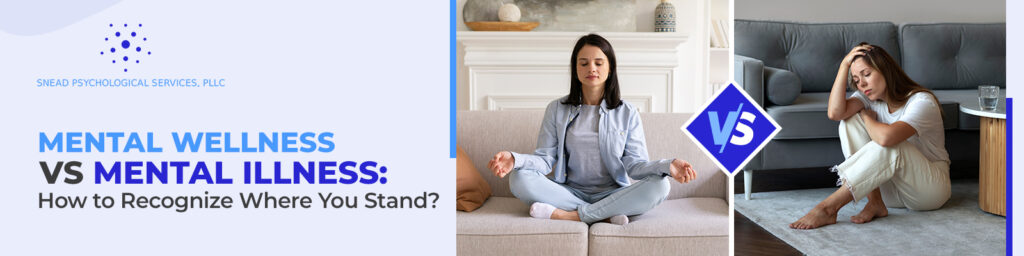
Conflict in relationships, pressure at work, and difficult life events can all shape a person’s mental health in ways that are not always obvious from the outside. Some people are able to navigate these challenges with coping strategies and support. Others may find that their usual tools are no longer enough, which can lead to significant emotional or behavioral changes. When these changes begin to interfere with daily life, a mental health condition may be present.
Mental health refers to a person’s overall emotional and psychological state. Mental illness, however, is a diagnosable condition that affects thoughts, feelings, and behaviors. The two are connected, but they are not the same.
It’s possible to have poor mental health without having a diagnosed disorder. It’s also true that someone living with a mental illness can build strong mental wellness through treatment, support, and intentional practices. Understanding this distinction is an important step in recognizing what kind of help you may need.
This article walks through the difference between mental wellness and mental illness, common causes and signs of mental health conditions, and what you can do to support your own wellbeing.
What is Mental Health?
| Aspect | Mental Wellness | Mental Illness |
|---|---|---|
| Definition | A positive state of emotional, psychological, and social well-being | A diagnosable condition affecting mood, thinking, or behavior |
| Focus | Prevention, balance, and resilience | Symptoms, diagnosis, and treatment |
| Nature | Ongoing lifestyle practice | Medical/clinical condition |
| Impact on Daily Life | Enhances productivity and relationships | Can disrupt work, relationships, and functioning |
| Treatment Approach | Self-care, habits, support systems | Therapy, medication, clinical intervention |
Not long ago, conversations about health focused almost entirely on the physical body. Today, more people are recognizing that mental health is just as essential.
To put it simply, physical health describes the condition of the body, while mental health describes the condition of the mind. These two aspects of wellbeing influence each other. Your physical health affects your mood and ability to cope, and your emotional state can affect sleep, energy, and motivation. Together, they shape how you move through life, how you relate to others, and how you experience your home, school, or work environment.
Strong mental health allows you to manage stress, make thoughtful decisions, build healthy relationships, and enjoy daily life. When mental health declines, you may notice persistent sadness, increased anxiety, irritability, difficulty concentrating, or a sense of being overwhelmed. Left unaddressed, these concerns can develop into more serious conditions that affect your ability to function.
What Defines Mental Illness?
While mental health is something every person experiences, mental illness affects only some individuals. Mental health exists on a spectrum and can shift from positive to negative depending on life circumstances. Mental illness, on the other hand, involves emotional, cognitive, or behavioral symptoms that interfere with daily functioning.
Mental illness is more than feeling sad or overwhelmed. People living with these conditions often experience persistent distress, difficulty managing emotions, and a sense of losing control over their thoughts or actions. Even so, having a mental illness does not mean someone cannot achieve strong mental health. With the right support, many people learn effective ways to manage symptoms and lead fulfilling lives. Reaching out for mental wellness counseling is often the first step toward that stability.
What is Mental Wellness?
Mental wellness focuses on cultivating a positive, balanced, and resilient state of mind. While conditions like depression or anxiety can make it difficult to access positive emotions, wellness practices help build the capacity to cope and find steadiness again.
Mental wellness is a holistic concept. It includes emotional wellbeing, psychological stability, and healthy social functioning. The goal is not only to reduce symptoms of mental illness but also to strengthen the resources that help you navigate life’s challenges.
What Causes Mental Illness?
Understanding what contributes to mental illness can help you recognize early signs and seek support sooner. Mental illness does not have a single cause. Instead, it develops through a combination of biological, psychological, and environmental factors. These influences often interact in complex ways.
Common contributors include:
- Early life experiences: Childhood neglect, abuse, or chronic instability can increase the likelihood of developing mental health challenges later in life.
- Trauma and stress: Significant life events such as relationship conflicts, workplace difficulties, financial strain, domestic violence, or social isolation can trigger or worsen symptoms.
- Biological factors: Medical conditions, hormonal shifts, and changes in brain chemistry can play a role. For example, diabetes, thyroid or adrenal issues, and menopause may influence mood and emotional wellbeing.
- Genetic factors: Having a close family member with a mental illness can increase risk, although genetics alone do not determine whether someone will develop a condition.
- Substance use: Alcohol and drug use can intensify existing symptoms and may trigger episodes of psychosis, mood instability, or paranoia.
Types of Mental Illness
Understanding the causes of mental illness is important, but so is recognizing the type of condition someone may be experiencing. Accurate identification helps guide effective treatment and support. Some of the most common categories of mental illness include:
1. Mood disorders
Mood disorders involve patterns of depressed or elevated mood that last longer or are more intense than typical emotional ups and downs and that interfere with daily life. This category includes conditions such as major depressive disorder, persistent depressive disorder, and bipolar disorders, which can involve periods of very low mood, loss of interest, or episodes of unusually high energy, reduced need for sleep, and impulsive behavior.
2. Anxiety disorders
Anxiety disorders are characterized by excessive fear, worry, or physical tension that is difficult to control and occurs more often or more intensely than would be expected. They may include symptoms such as restlessness, rapid heartbeat, trouble sleeping, muscle tension, and difficulty concentrating, and they encompass conditions like generalized anxiety disorder, panic disorder, phobias, and social anxiety disorder.
3. Post‑traumatic stress disorder (PTSD) and related disorders
PTSD can develop after a person experiences or witnesses a traumatic event involving actual or threatened death, serious injury, or sexual violence. Symptoms may include intrusive memories or flashbacks, nightmares, avoiding reminders of the trauma, feeling constantly on edge, negative changes in mood or beliefs, and strong emotional or physical reactions to cues that resemble the event.
4. Feeding and eating disorders
These conditions involve persistent disturbances in eating behaviors and thoughts about food, body weight, or shape that impair health or functioning. Examples include anorexia nervosa, bulimia nervosa, and binge‑eating disorder, and may involve restricting food, binge eating, compensatory behaviors such as vomiting or misuse of laxatives, or intense distress and shame related to eating or body image.
5. Schizophrenia and related psychotic disorders
These conditions can involve changes in perception and thinking, such as hearing voices, seeing things others do not, or holding strong beliefs that are out of touch with reality. People may also experience disorganized thinking, difficulty following conversations, and changes in motivation or emotional expression.
Signs of Mental Illness
Mental illness can look different from one person to another. The signs depend on the type of condition and the individual’s unique experience. Some symptoms may be subtle, while others are more noticeable.
Sometimes the earliest sign is a change in how a person thinks, feels, or behaves. For example, someone who was previously social may begin withdrawing from friends and family after a difficult event. Others may experience intense worry, confusion, or unusual perceptions such as hearing voices.
Common signs of mental illness include:
- Trouble sleeping, either staying awake for long periods or sleeping much more than usual
- Thoughts that seem unusual, illogical, or difficult to control
- Withdrawing from social interactions or activities
- Changes in eating patterns, including restriction, overeating, or excessive focus on calories or exercise
- Irritability, anger, or emotional outbursts
- Lack of motivation or difficulty completing everyday tasks
- Persistent sadness or hopelessness
- Thoughts of self-harm
- Preoccupation with topics such as death, guilt, or religion
- Decline in school or work performance over time
Recognizing these signs early can make it easier to seek help and begin appropriate treatment.
How does mental illness affect wellness?
Poor mental health does not always lead to a diagnosed mental illness. But when negative thoughts, emotions, or behaviors persist over time, they can develop into mental health conditions that interfere with daily life. Strengthening mental wellness is an important part of reducing symptoms and preventing problems from becoming more severe.
When mental illness becomes more active or “flares,” it affects both emotional and physical wellness. This creates a cycle in which mental and physical health influence one another, often making symptoms harder to manage.
Here are some examples of how mental illness can affect overall wellness:
- Depression and physical health: Depression has been linked to changes in heart rhythm and a higher risk of chronic conditions such as stroke, heart disease, asthma, and diabetes.
- Stress, anxiety, and sleep: Excessive worry and tension can make it difficult to sleep. Poor sleep often leads to fatigue, headaches, muscle tension, and irritability.
- Immune system impact: Chronic emotional distress can weaken the immune system, making the body more vulnerable to infections and illness.
- Effects on basic self-care: When someone is overwhelmed by sadness or anxiety, even simple tasks can feel exhausting. Skipping meals, neglecting hygiene, or avoiding routine responsibilities may follow, which can lead to malnutrition or physical decline.
- Daily functioning and relationships: Symptoms like constant fear, panic, or low mood can disrupt school, work, and social interactions. This may lead to absenteeism, conflicts, or withdrawal from relationships, all of which reduce overall wellness.
Mental illness affects far more than mood. It influences behavior, energy, immunity, physical health, and the ability to engage with daily life. Seeking support early, rather than trying to push through symptoms alone, can prevent this cycle from worsening.
Mental Wellness vs Mental Illness: How Are They Different?
Although the terms “mental health,” “mental illness,” and “mental wellness” are often used interchangeably, they describe different aspects of a person’s wellbeing.
Mental illness refers to conditions that disrupt thoughts, emotions, or behavior. Mental wellness, in contrast, is the proactive process of building resilience, stability, and a sense of purpose. Even when someone is experiencing symptoms of mental illness, they can still work toward greater wellness.
Here are some key differences between mental wellness and mental illness:
1. Wellness vs well-being
Mental illness can interfere with a person’s emotional and psychological well-being. Mental wellness, on the other hand, focuses on strengthening well-being by reducing negativity, building coping skills, and creating a more fulfilling life.
2. Scope
Mental wellness is important for everyone, including those experiencing temporary stress or periods of low mental health. Mental illness is a persistent condition that often requires professional assessment and treatment from a therapist, counselor, or psychologist.
3. Functionality
Mental wellness supports your ability to manage daily responsibilities and make healthy choices. Mental illness can limit functioning and make everyday tasks feel overwhelming.
4. Treatment vs lifestyle
Mental wellness can often be supported through lifestyle choices such as healthy sleep, movement, social connection, and stress management. Mental illness typically requires structured treatment, including therapy, medication, or other interventions.
Understanding this distinction helps people recognize when they can focus on improving wellness on their own and when it may be time to seek professional care. Both concepts matter, and both play a role in building a healthier life.
Can mental wellness prevent mental illness?
Mental illness does not arise simply from “negative thoughts,” but ongoing emotional distress, unhealthy coping patterns, and difficult life circumstances can contribute to its development. For example, someone who struggles with body image might develop harmful behaviors around food, which can eventually lead to an eating disorder. These patterns affect both emotional and physical health.
Mental wellness practices help counter these patterns by promoting resilience, supporting emotional balance, and building healthier ways of thinking and coping. Engaging in wellness programs can reduce vulnerability to common triggers such as stress, anxiety, and depression.
Below are seven therapist-recommended strategies that support mental wellness and contribute to a healthier, more stable life.
Top 7 Ways to Strengthen Mental Wellness
1. Journaling
Putting thoughts into words can be difficult, especially for individuals who have experienced trauma. Gratitude journaling offers a gentle way to reflect on meaningful moments, notice progress, and acknowledge positive aspects of daily life. This simple practice encourages emotional awareness and reduces the tendency to internalize distress.
2. Advocate for a Cause You Believe In
Working toward something meaningful can bring a sense of purpose and connection. Whether it’s supporting animal rights, volunteering, or participating in community initiatives, advocacy helps transform negative emotions into constructive action. Many people find that contributing to a cause provides comfort and renewed energy during stressful times.
3. Music Therapy
Music has a natural ability to soothe the mind and reduce anxiety. Listening to calming tracks, creating playlists, or exploring guided music therapy can ease restlessness and help regulate emotions. A therapist may incorporate music into a broader wellness plan depending on your needs.
4. Meditation and Mindfulness
Stress, trauma, and anxiety often keep the mind in a heightened state of alertness. Practices like meditation, yoga, or deep breathing can bring the body back into balance. Over time, these habits improve focus, reduce tension, and help you approach challenges with greater clarity.
5. Try a New Hobby
Routine can be grounding, but it can also lead to emotional stagnation. Picking up a new hobby—such as painting, hiking, cooking, or team sports—can lift your mood and redirect your attention away from negative thinking. Exploring something new encourages creativity and helps restore a sense of joy and curiosity.
6. Improve Your Sleep Quality
Sleep and mental health are deeply connected. At night, when distractions fade, negative thoughts may intensify and disrupt rest. Creating a bedtime routine, reducing screen time, or taking a warm bath before bed can support healthier sleep patterns and reduce fatigue.
7. Speak with a Professional
Mental wellness is not a quick or linear process. While lifestyle changes can help, a licensed therapist can guide you through deeper emotional work, identify root causes of distress, and create tailored strategies for long-term wellbeing. Therapy offers a structured and supportive environment where you can explore concerns related to relationships, work, school, trauma, or major life transitions.
Start Your Mental Wellness Journey with Snead Psychological Services
Understanding the difference between mental wellness and mental illness empowers individuals to choose paths that support long-term health. Even if you are struggling with low mood, anxiety, or stress, you can still move toward wellness with the right guidance. When symptoms begin to interfere with daily life, it becomes even more important to seek support.
At Snead Psychological Services, we provide personalized mental wellness counseling designed to improve emotional balance and overall functioning. Dr. Alex Snead takes a comprehensive approach, considering factors such as sleep, stress levels, relationships, and daily habits to develop a tailored wellness plan.
Taking the first step is often the hardest, but it is also the most meaningful.
Explore our services today and begin your path toward a healthier, more grounded life.
