

The sudden outbursts or numbness in your teens can be difficult to watch, leaving you with too many questions. When they finally agree to a therapy session, it often brings a sense of relief.
Being in a safe, confidential environment with a professional who understands teen issues is helpful. But at the same time, you may want to reconnect with your child after the long session.
The curiosity about what is troubling your teen and leading them to be angry, sad, or distant is understandable. You want to understand their progress and offer support.
However, you also need to consider that it takes time for them to process their emotions. Also, many of them won’t even open up to share everything.
In that regard, talking to your teen after therapy isn’t just about asking details. It’s about listening to them without judgment, respecting their privacy, and staying consistently present.
This blog explores how you can support your teen after a therapy session, navigate challenges that they experience, and create a safe environment for them. It will also discuss when your teen needs additional guidance.
Why Post-Therapy Support Is Important for Teens?
Therapy doesn’t end with the 45+ minute sessions. Your teen may continue to process emotions, reflect on difficult conversations, or practice coping skills throughout the week.
Frequent mood swings, sudden outbursts, or isolating from social events- all indicate when a teenager should see a therapist. They also agree to seek professional help and find solitude by sharing their issues in a judgment-free zone.
Often, the discussions can be heavy, which may reveal their deep-seated anxiety, trauma, or other issues. Such conversations usually stay in the teens’ minds, and they try to work on them all at once.
In such a scenario, post-therapy support becomes essential for teens. It helps them get familiar with the coping skills they learned in session. Moreover, post-therapy support is important because:
- It helps teens apply therapeutic tools such as cognitive reframing and emotion regulation. For instance, your teen is stressing over an upcoming exam. Through techniques such as deep breathing or identifying their feelings, they may respond to the event better.
- It reinforces healthy communication. If your teen is talking about a difficult day, instead of offering immediate solutions, listening to them will make them feel heard.
- It helps build confidence in teenagers. Acknowledging small wins, such as managing anxiety before a school presentation, encourages your teen to keep using the strategies they learn in therapy.
- Such support helps create consistency between therapy and home. When parents respond with patience and empathy, teens can practice healthy habits in a supportive environment.
What to Do After Your Teen’s Therapy Session?
The best thing you can do after therapy is to offer support without expecting an immediate conversation. Instead of asking questions back-to-back, try creating a calm environment. Let them speak first to ensure they are in a pressure-free environment.
After a therapy session, some teens may feel relief simply from the calm space the professional provides. For others, the sessions can feel emotionally draining, particularly when they are battling deeper issues like anxiety, trauma, and depression.
Neither reaction is unusual. Giving your teen the space to reflect and reminding them you’re available can create a supportive environment.
Here are a few ways to help a teen after each therapy session:
- Give them time to decompress: Your teen may want to listen to music, take a walk, or sit quietly after the session. Let them process the discussions at their own pace before returning to their routine.
- Avoid asking for a session recap: Instead of asking, “What did you talk about?” try saying, “I’m here if you want to talk later.” It reflects a supportive approach to communicating openly without creating pressure.
- Stick to familiar routines: A regular meal, homework schedule, or family activity can provide a sense of stability after an emotionally demanding session.
- Check in on their emotional needs: Ask simple questions such as, “Would you like some time alone?” or “Is there anything you need right now?” These questions show support without invading their privacy.
- Respect the therapist’s process: Your role is to reinforce a safe environment at home, not continue the therapy session. Trust that progress often happens gradually between appointments.
Talking to Your Teen After Therapy Without Making Them Uncomfortable
It’s natural to wonder how your teen’s therapy session went. However, asking too many questions too soon can overwhelm them, leading to withdrawal rather than opening up. Talking to your teen after therapy becomes easier when you focus on building a connection rather than curiosity.
Some teens are comfortable talking immediately, while others need hours or even days to process a session. Both responses are normal. Your role isn’t to gather information. It’s to let your teen know you’re available whenever they’re ready.
The following are the ways you can talk to your teen comfortably after the therapy session:
Ask open ended-questions
After a therapy session, the typical response among adults is to understand what happened. But jumping right to the details can overwhelm the teenager. Instead of asking directly, you can ask, “How are you feeling after the session?”
It gives teenagers time to decide whether they are comfortable sharing the details. It also lifts the pressure off the teens to explain every detail.
Accept it silently without taking it personally
Some emotions can feel heavy for the teen, as discussed in the session. Asking them about those memories after the session hinders the healing process. These memories could be associated with the loss of someone, leading to grief or deep-seated trauma.
Your teen may not be ready to share those memories. So ensure that whenever they’re ready, you’re available for them. Your teen would trust you more when you show up when they need you, rather than asking them repeated questions.
Listen more than you speak
When your teen finally lets their guard down and talks about the session, listen to them. The discussions might make you want to offer them solutions or tell them what to do. In those circumstances, resist your urges.
Give your teen your full attention and let them finish speaking before you respond. Feeling heard can be more valuable than receiving immediate advice.
Respect their privacy
Sometimes your teen understands a change in them. The hobbies your teen pursued are now becoming a burden or wearing them down. After identifying those changes, the teenager gathers the courage to look for professional help.
The question about how to tell your parents you need therapy should foster healthy boundaries. Ensure you support them through availability and patience rather than being pushy and judgmental.
Helping Your Teen Through Therapy at Home
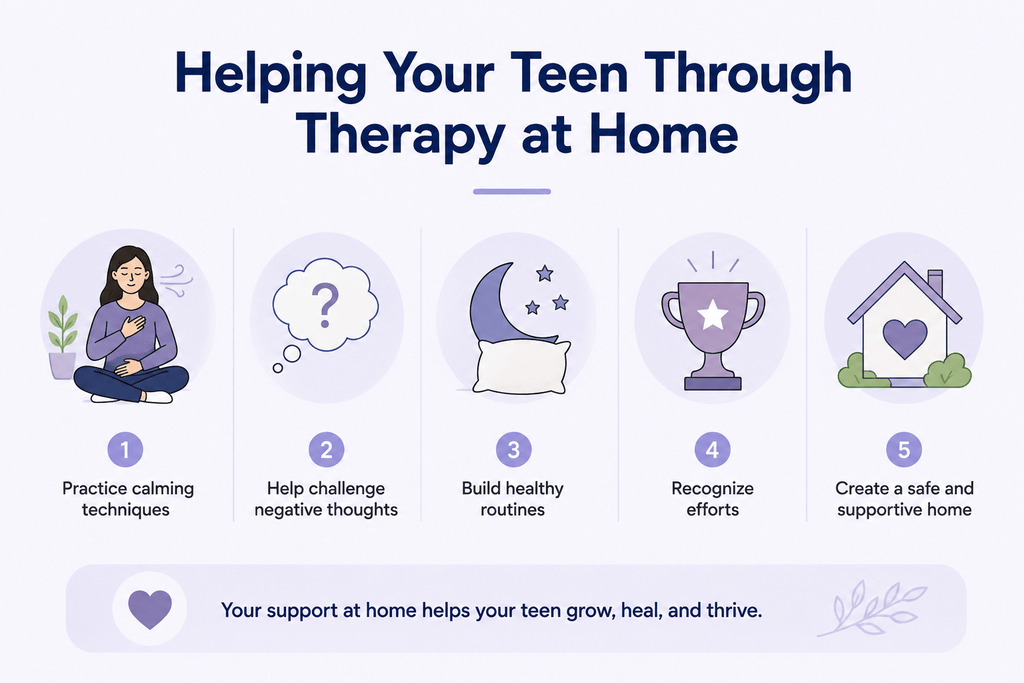
Therapy offers teens practical tools to manage their emotions, thoughts, and behaviors. The real progress takes place between sessions when they use those tools in everyday situations. Helping your teen through therapy doesn’t mean becoming their therapist.
It means creating opportunities for them to practice what they’ve learned. Cognitive behavioral therapy (CBT) is a popular, evidence-based approach that therapists use to teach coping skills such as positive thinking patterns and emotion regulation.
Understanding the basics of the approach will ensure you support your teen and reinforce those skills at home.
Practice calming techniques during stressful moments
Before a test, your teen may start feeling anxious. Or, an argument may overwhelm them. In those scenarios, encourage the teenager to pause rather than react immediately.
You ask them to take five slow breaths together or suggest naming five things that they see around them. These exercises can help them regain focus before responding.
Help them challenge negative thoughts
If your teen says, “Nobody likes me,” or “I’m going to fail,” don’t ignore their feelings. Supporting them at home means asking the right questions. You can ask them, “What makes you think that?”
It will allow them to self-reflect. They will start looking at the situation from another perspective without feeling criticized.
Build healthy routines that support emotional well-being
Healthy habits make coping skills easier to use. Your teen may experience trouble sleeping due to academic stress. Encourage them to practice a regular sleep schedule.
It may seem difficult at first, so you can encourage them to take a short walk after dinner. It will help your teen relax and process their emotions.
Recognize efforts instead of expecting big changes
Progress in therapy is gradual. If your teen is using a coping strategy instead of reacting impulsively, acknowledge it.
Even though certain arguments may provoke anger, they are expressing their emotions openly without losing their temper. It is a small win for your teen. Making a small comment like “I noticed how calmly you handled it” can reinforce positive behavior and build confidence.
Parenting a Teen in Therapy: Common Challenges and Solutions
Therapy is a rollercoaster of emotions, not just for the teens but for the family as well. Parenting a teen in therapy usually means balancing support with patience. It also includes respecting their growing independence.
Implementing all these elements at once can seem challenging, especially when the emotions run too deep. Thus, you should identify the challenges that your teenager is experiencing and then offer a therapeutic solution tactfully.
Let’s look at the common challenges with children in therapy and what solutions you can offer:
Your teen doesn’t want to attend the therapy
Some teens may resist the idea of therapy altogether. Their anxiety can make them feel misunderstood or judged. When such heavy emotions are working inside their minds, pushing them towards therapy may seem like a punishment.
Instead, you acknowledge their concerns and explain that therapy is a safe space where they can discuss anything. Stating positive things or giving an example of someone seeking help can engage a resistant adolescent in therapy and offer practical ways to encourage participation.
You expect quick results
Therapy takes time, and progress doesn’t always happen in a structured path. Your teen may feel encouraged in some weeks. In other situations, their mental health may relapse, and they feel anxious or scared.
Rather than focusing only on breakthroughs, notice small improvements. For instance, your teen used anger as a form of response to every situation.
But after therapy, they handle most of the situations calmly and engage in open communication. That’s the kind of improvement that requires celebration.
You don’t know when to step in
Parents find it hard to decide whether they should give their teen more space or intervene. The gap often weakens the support system that teens look for at home. If your teen is dealing with everyday stress, allow them to walk through it independently using the coping skills they’ve learned.
However, if they seem withdrawn or overwhelmed, you should check in with your teen. You can also discuss your concerns with their therapist if their anxiety or stress is affecting daily life, school, or relationships.
Therapy brings up different emotions at home
Your teen becomes more emotional as they work through challenging experiences in therapy. They may still be reacting to things harshly as they are just transitioning towards using coping skills.
Stay calm in those moments and avoid dismissing their feelings. Also, don’t try to fix their behavior as that is something they have to do independently. On your part, be empathetic and maintain a stable home environment to offer reassurance.
Ways to Support Your Teen’s Mental Health Outside Therapy
Therapy is only one part of your teen’s mental health journey. The relationships, environment, and habits they experience also shape their emotional well-being.
Besides regular therapy sessions, there are several ways to support your teen’s mental health and help them feel more confident. These ways include:
- Encouraging healthy habits: Balanced meals, physical activity, and breaks from screens can contribute to better emotional health. These habits can make it easier for teens to cope with everyday stress.
- Taking an interest in their world: Connect with your teen. Ask them about their hobbies, school activities, and interests. Ensure not to turn every conversation into a discussion about their mental health. These interactions can strengthen your bond with your teen and build trust so they feel comfortable sharing things with you.
- Helping them build supportive relationships: Encourage your teen to spend time with trusted friends, mentors, or teachers. With a reliable support system, they will be reassured that they don’t have to face challenges by themselves.
- Understanding their emotional triggers: Friendship issues, changes at school, and academic pressure can affect a teen’s overall emotional well-being. Taking the time to understand what upsets your child can help you respond with greater empathy rather than making assumptions.
- Modeling healthy coping strategies: Children learn from grown-ups. The same thing goes for a teen. When you handle a difficult situation calmly as well, it motivates the adolescent to adopt a similar approach. Ensure you model coping strategies such as prioritizing self-care and communicating openly. It will show your kids healthy ways to manage difficult situations.
Understanding What Your Teen May Be Working Through
Therapy encourages teens and children to explore emotions that they struggle to express or ignore. As a result, you can notice changes in their moods, behavior, and communication between sessions.
Providing teen therapy support starts with understanding these changes, which becomes an essential part of their healing process.
Feeling emotionally exhausted
Some therapy sessions involve conversations about difficult topics. It could be conflicts in the family, relationship issues, or anxiety. After these heavy discussions, your teen may come home feeling quiet and emotionally drained.
Give them time to reset and process their thoughts. Once they are able to process those moments at their own pace, it can help them open up gradually about those topics.
Changes in old habits
Therapy often challenges unhelpful thought patterns and behaviors. There could be moments when your teen has self-doubt, and by using coping skills, they will transform those negative thoughts into positive behaviors.
At first, these changes may feel unfamiliar. But once they identify their triggers, they can create boundaries. For instance, if an upcoming test is triggering their anxiety and making them feel they are going to fail, they can process that thought. Taking slow, deep breaths will calm them and focus on the subject.
Requiring more personal space
After a therapy session, your teen may spend more time alone. It doesn’t mean that they are shutting you out. But it simply means that they are trying to process new thoughts and emotions.
Teens may struggle transitioning from a feeling of heaviness to openly communicating with others. By respecting their privacy, you help your teen feel valued. If required, you can occasionally check in on them and let them know you’re available for a talk whenever they’re ready.
Noticing emotions more intensely
As a parent, you may wonder: Why is my teenager so angry? It could be the academic pressure or family conflicts that are making them frustrated. Therapy is a tool that they rely on to vent their emotions without feeling judged.
Talking about what triggers their anger can be extremely challenging in the sessions. Once they come home, asking the same question only makes things worse. Hence, it is essential to unwrap their thoughts in their own way and encourage them when they handle situations more calmly.
When Parents Should Seek Additional Guidance?
It is normal for teenagers to have good and difficult days. However, navigating the difficulties alone becomes heavy. Those moments often require professional guidance.
A therapist or a mental health professional will use evidence-based approaches to identify what’s bothering your teen. Through guided exercises, your teen will develop healthy coping mechanisms.
But knowing how to help a teenager after therapy means recognizing their distress and supporting them even at home.
The following are the situations when parents seek additional guidance for their teens/children:
- Your teen’s emotions continue to hinder daily life: declining grades in school, poor sleep cycles, and changes in appetite indicate your teen needs additional support.
- Their distress becomes more intense: Persistent anxiety, emotional outbursts, and withdrawal from family and friends signal their treatment plan needs a review.
- Teens refuse to participate in therapy: Try to understand what’s making them reluctant rather than assuming that therapy isn’t helping. Talk to their therapist and share your concerns to identify the next steps in the treatment.
- You feel unsure about your role as a parent: Your teen’s therapist may involve you at some point during the session, which gives you room to ask questions. The therapist can also help you understand how to support their progress while maintaining healthy boundaries.
Build a Strong Support System for Your Teen With Snead Psychological Services
So, how to support your teen after a therapy session? Not by asking direct questions or pushing them to give away the details. Rather, you should give them time to process the discussions.
Sometimes, teens are comfortable sharing what happened in therapy right after coming home. In other cases, they may take hours or even days to share the details finally. By giving them the time, you’re respecting their privacy.
However, that doesn’t mean you cannot say anything to the teen. You should listen to them whenever they’re ready, rather than offering immediate solutions. Furthermore, you can help them practice coping strategies in times of distress, which will make them feel valued.
In addition to at-home support, you should also provide them with additional guidance when their distress intensifies.
At Snead Psychological Services, we work closely with teens, children, and families to provide compassionate, evidence-based mental health care. Our expert, Dr. Alex Snead, creates personalized treatment for each child’s unique needs.
We use different types of child therapy to help them build healthy coping mechanisms. Even as a teenager, it helps navigate life changes with confidence and improves emotional regulation.
Explore our evidence-based therapy and help your teen handle life difficulties with independence.
Frequently Asked Questions
1. Should I ask my teen what happened in therapy?
Yes, you can ask your teen what happened in therapy. However, don’t pressure them to share the details. Avoid asking for a full recap and let them know you’re available whenever they are ready to talk about it. Respecting your teen’s privacy will build trust and support the therapeutic process.
2. How can I support my teen without invading their privacy?
You can support your teen without invading their privacy by being present. Rather than seeking information, you can listen to them without judgment. You can encourage healthy routines at home so that they open up naturally. Furthermore, creating a safe environment where they feel heard is an effective way to support a teen in therapy.
3. What if my teen refuses to talk after therapy?
If your teen refuses to talk after therapy, give them time and space. Some teenagers need that to process their thoughts before discussing what happened in the therapy session. Show support, but don’t push yourself on your teen. It will help them decide whether to open up.
4. How long does it take for therapy to help teenagers?
It typically takes 6 weeks to months for a teen to show meaningful results. Some teenagers feel initial emotional relief from just being in a safe and confidential environment. Again, teenagers with academic stress or mild anxiety require more than 4 sessions. In other cases, teens battling deeper issues like chronic depression or trauma require 3-6 months to develop coping habits.
5. Can parents be involved in teen therapy?
Yes, parents can be involved in therapy. Being present during the session will help you better understand the coping strategies. When your teen shows signs of distress, you can support them through those habits. However, the therapist limits involvement to maintain the teen’s confidentiality.
6. What are the best ways to support your teen’s mental health at home?
The best way to support your teen’s mental health at home is by practicing open communication with them. Individuals at this age are curious about a lot of things. Ensure you can answer their questions rather than judge them. Also, establish daily routines and celebrate their small improvements. These habits complement therapy and provide lasting teen counseling tips for parents who want to support their child between sessions.
