
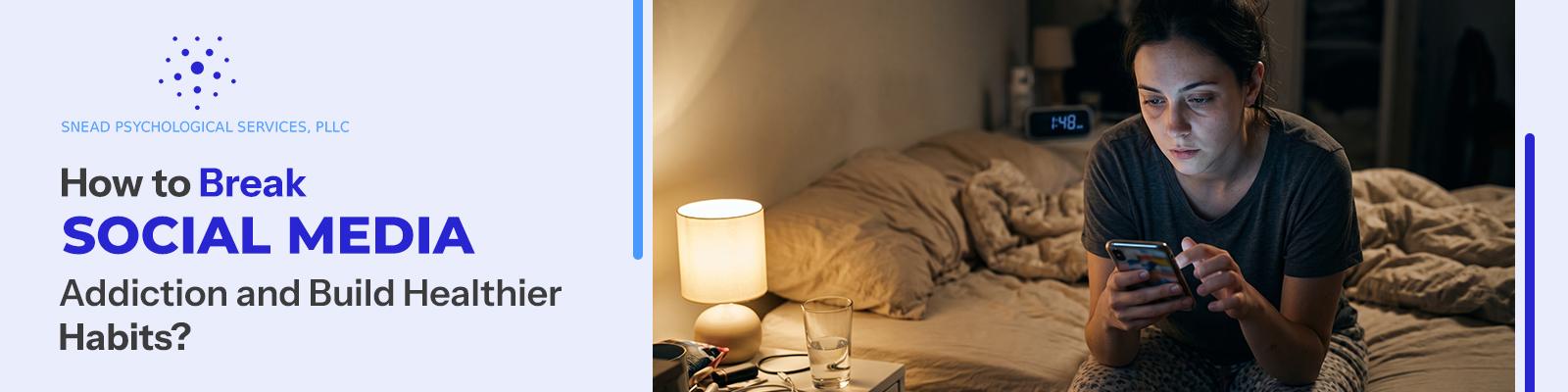
You open Instagram for a quick look. A few videos turn into 30 minutes of scrolling. You may do the same on TikTok or Facebook without even realizing how much time has passed.
Frequent social media use does not automatically mean you are addicted. What matters is whether you can control your use and how it affects your life.
If scrolling regularly interferes with sleep, work, relationships, or daily responsibilities, it may be time to change the pattern. Start by looking at when and why you use social media.
When do you reach for your phone? What are you feeling at that moment? Understanding these patterns can make them easier to change.
For some people, social media use is also tied to stress, anxiety, loneliness, or other emotional struggles. In those situations, simply setting a screen time limit may not address the real issue.
Therapy can help you understand what keeps the pattern going and develop other ways to cope. The steps below can help you begin building a healthier relationship with social media.
What Is Social Media Addiction?
People often use the term social media addiction to describe repeated, difficult-to-control use that interferes with everyday life.
Social media addiction is not a standalone diagnosis in the DSM-5-TR. Still, problematic use can cause distress and deserves attention, especially when checking becomes a way to briefly relieve anxiety or discomfort.
Frequent checking alone does not mean you have obsessive-compulsive disorder (OCD). A clinician considers the broader pattern of symptoms, distress, and impairment rather than screen time alone.
Signs of Social Media Addiction
The signs are not only about how much time you spend online. Pay attention to whether social media feels difficult to control or starts affecting other parts of your life.
- You keep checking without thinking: You reach for your phone automatically, even when there is no real reason to check it.
- You struggle to cut back: You try to spend less time online but keep going back to the same habit.
- You feel restless without it: Not being able to check social media leaves you feeling uneasy, bored, or irritable.
- You lose track of time: A quick check often turns into much longer scrolling than you intended.
- Responsibilities start slipping: Social media gets in the way of work, school, household tasks, or other commitments.
- Sleep is affected: You stay up scrolling or check social media when you should be sleeping.
- You use it to escape feelings: You turn to social media whenever you feel stressed, lonely, anxious, or upset.
- You continue despite problems: You notice negative effects but still find it hard to cut back.
- Other people express concern: Someone close to you notices your social media use and points out that it seems excessive or disruptive.
Is Social Media Addiction a Real Disorder?
Problematic social media use can be a real and disruptive concern, even though social media addiction is not a standalone DSM-5-TR diagnosis.
A mental health professional can help you explore whether your use reflects a habit, a way of coping with difficult emotions, or symptoms of another condition.
The key questions are whether you can choose when to stop and whether your use is interfering with the life you want to lead.
What Causes Social Media Addiction?
Problematic social media use can develop through a combination of learned habits, emotional needs, and platform features that encourage continued use.
Several factors may make it harder to put your phone down.
1. Reward and Instant Feedback
Likes, comments, messages, and fresh content provide quick rewards that can make you check social media again. Over time, this can turn checking into an automatic habit, even when you did not intend to open the app.
2. Endless Scrolling and Personalized Content
Endless feeds make it easy to keep scrolling because there is no clear point to stop. Personalized content, eye-catching visuals, and frequent notifications can keep your attention going longer than you planned.
3. Stress, Boredom, or Emotional Escape
Social media can become an easy distraction when you feel stressed, lonely, bored, or uncomfortable. Scrolling may offer temporary relief from difficult feelings, making you more likely to reach for your phone the next time those feelings come up.
4. Fear of Missing Out (FOMO)
The fear of missing something important can make you feel like you need to keep checking social media. You may worry about missing a message, update, event, or conversation, even when you are trying to focus on something else.
5. Habit and Easy Access
When your phone is always within reach, checking social media can become an automatic response to boredom or any quiet moment. Over time, you may open an app without thinking, simply because checking your phone has become part of your routine.
How Do I Know If I’m Addicted to Social Media?
If checking is your usual response to stress and anxiety, consider how much choice you feel you have over your use. Do you open apps intentionally, or do you find yourself checking even when you want to do something else?
The following patterns can signal that your use needs attention. They are starting points for reflection, rather than a diagnostic checklist.
- You plan to scroll for a few minutes but end up staying much longer.
- You feel the need to look at your phone repeatedly throughout the day.
- You set boundaries but repeatedly return to the same pattern.
- You turn to social media whenever you feel bored, lonely, stressed, or upset.
How to Reduce Problematic Social Media Use Without Quitting Completely
You do not have to delete every social media account to change your habits. Start by reducing automatic checking and creating clearer boundaries around when and why you use these apps.
Choose one or two changes to start with. You can adjust them as you learn what works for your routine.
1. Start by Tracking When and Why You Check
Start by noticing when you reach for your phone and what is happening at that moment. Note the time, app, what you were doing, how you felt, and how long you stayed online.
After a few days, you may notice patterns linked to boredom, stress, loneliness, or simple habit. Understanding these triggers makes it easier to decide what needs to change.
2. Turn Off Unnecessary Notifications
Turn off alerts that tempt you to open social media throughout the day. Keep notifications only for messages or updates you genuinely need.
Fewer alerts mean fewer interruptions and fewer reminders to check your phone. This simple change can make it easier to stay focused on what you are doing.
3. Make Social Media Slightly Harder to Access
Move social media apps off your home screen or log out when you are not using them. You can also use app blockers during work or study time.
These small barriers give you a moment to pause before opening the app. If the urge comes with anxious thinking, strategies to stop racing thoughts may also help you respond more deliberately.
4. Set Specific Times for Checking Social Media
Choose specific times to check social media, such as during a lunch break or after work. Decide in advance how long you want to spend, and use a timer if it helps.
This gives you time to stay connected without letting social media take over every quiet moment in your day.
5. Replace the Habit With Something You Actually Enjoy
Have something ready to do when you feel like reaching for social media. Go for a walk, read, exercise, listen to music, call a friend, spend time outside, or work on a hobby.
Choose an activity that meets the need behind the urge. If you are lonely, connect with someone. If you are bored, try something engaging. If you need a break, step away from your task for a few minutes.
Healthy Screen Time Habits for Everyday Life
Healthy screen use is not about avoiding your phone altogether. It is about making room for sleep, relationships, movement, and time away from screens.
- Keep meals screen-free: Put your phone aside while eating so meals become a chance to slow down and connect with others.
- Protect your bedtime: Charge your phone away from your bed and give yourself time to wind down without scrolling. If worry keeps you awake, learning to manage anxiety at night may also be useful.
- Take regular eye breaks: Look away from your screen and change your focus throughout the day, especially during long periods of use.
- Curate what you consume: Unfollow accounts that leave you feeling stressed, inadequate, or emotionally drained.
- Be present during conversations: Give people your attention instead of dividing it between a conversation and your phone.
- Notice how content affects you: Pay attention to your mood after scrolling. If certain content consistently leaves you upset or overwhelmed, consider stepping away.
- Build screen-free transitions: Leave some time between activities without immediately reaching for your phone. This helps you become more comfortable with quiet moments.
How to Build Healthier Digital Habits That Last
Lasting change takes practice. Review what helped each week, notice where your plan was difficult to follow, and adjust your boundaries to fit your needs.
If you return to an old pattern, treat it as information. What was happening just before you started scrolling, and what could help in that situation next time?
When checking remains difficult to control, a therapist can help you understand its purpose and choose an approach that fits your symptoms and goals. Options may include:
- Cognitive behavioral therapy (CBT): Helps you identify thoughts, feelings, and behaviors that keep the pattern going and practice different responses.
- Exposure and response prevention (ERP): An established treatment for OCD. If phone checking is part of OCD-related compulsions, a clinician may recommend ERP to help you face triggers while resisting the checking ritual. It is not a default treatment for heavy social media use.
- Mindfulness practices: Help you notice an urge, pause, and decide whether checking supports what you want to be doing.
- Habit-focused strategies: A therapist can help you identify triggers, create realistic phone boundaries, and replace repeated checking with healthier routines.
- Stress management: Helps you develop other ways to respond to stress, boredom, uncertainty, or loneliness so scrolling is not your only source of relief.
Is Social Media Addiction the Same as Internet Addiction?
Problematic social media use is one type of problematic internet use. The broader term can include several online activities; social media use refers specifically to social platforms.
The American Psychiatric Association describes concerns involving activities such as social media, gaming, and gambling. These behaviors have different clinical considerations, so the terms should not be treated as interchangeable diagnoses.
When Should You Consider Talking to a Therapist About Your Social Media Addiction?
Consider talking with a therapist when your social media use feels difficult to control or starts interfering with the rest of your life. You don’t have to wait until the habit becomes overwhelming to seek support.
These signs may suggest that it is time to look beyond self-help strategies:
- You cannot cut back: You repeatedly try to reduce your use but return to the same pattern.
- Your sleep suffers: You stay up scrolling or check your phone instead of sleeping.
- Work or school is affected: Social media makes it harder to focus or complete responsibilities.
- Relationships are suffering: Phone use creates distance, conflict, or less time with people you care about.
- You skip other activities: You would rather stay online than participate in hobbies, plans, or everyday activities.
- You feel uneasy without your phone: Not being able to check social media leaves you anxious, restless, or upset.
- You use it to escape: You turn to social media mainly to avoid stress or difficult emotions.
- Self-help has not helped enough: You have tried changing your habits but still feel stuck.
Support for Healthier Social Media Habits at Snead Psychological Services
A healthier relationship with social media starts with understanding your habits and choosing realistic changes.
Make room for sleep, relationships, and activities you enjoy. Give yourself time to practice, and revise your plan when needed.
If your use still feels difficult to control, therapy can help you explore what keeps the pattern going and work toward changes that fit your life.
At Snead Psychological Services, we provide psychological care for concerns including OCD, anxiety, and stress.
We can help you understand the feelings behind repeated checking and develop coping skills. If online comments or comparisons affect your mood, exploring ways to stop taking things personally may also be helpful.
Contact Snead Psychological Services to discuss your concerns and whether our services are a good fit for your needs.
FAQs
1. What are the signs of social media addiction?
Common signs include checking social media automatically, struggling to cut back, losing track of time, and feeling restless when you cannot access it. It may also start affecting your sleep, responsibilities, relationships, or other activities. The amount of time alone doesn’t determine whether your use is problematic.
2. How do I set screen time limits?
To set screen time limits, decide how much time you realistically want to spend on social media each day. Use your phone’s built-in screen time settings to create app limits, turn off unnecessary notifications, and set phone-free periods during meals, work, study, or bedtime.
3. How do I stop checking my phone every few minutes?
You can stop checking your phone so often by identifying what triggers the urge. Turn off unnecessary notifications, keep your phone out of reach when you need to focus, and pause before checking it. Replacing the habit with another activity can also help you check your phone less often.
4. How can I change problematic phone use?
Identify which apps or habits are interfering with your life, then choose specific boundaries. Turn off unnecessary alerts, create phone-free periods, and plan alternatives to checking. If these changes are not enough, a therapist can help you explore the underlying pattern.
5. Can social media addiction affect sleep and mental health?
Problematic social media use can interfere with sleep and is associated with mental health concerns. Late-night scrolling may delay bedtime, and some content can leave you feeling anxious or overwhelmed. The relationship can work both ways: people may also scroll more when they are already distressed. Notice how your use affects you and seek support if it regularly disrupts daily life.
