
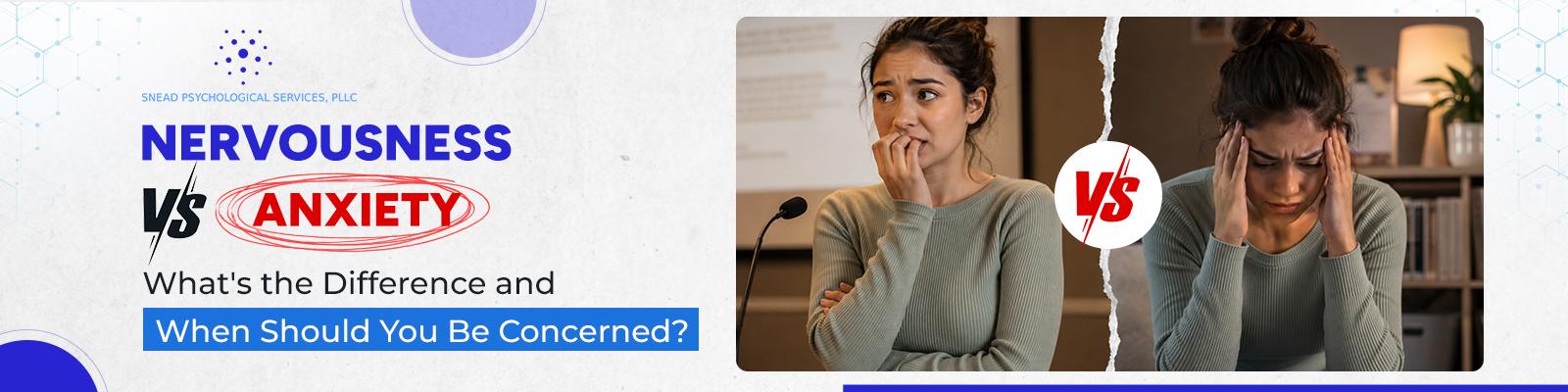
Have you ever felt your heart race before an important presentation, noticed butterflies before a first date, or had difficulty relaxing while waiting for an important decision?
Feeling nervous in situations like these is normal. Nervousness is often your body’s response to something important, unfamiliar, or uncertain.
Anxiety can feel similar. Both nervousness and anxiety can involve worry, a racing heart, muscle tension, difficulty concentrating, and other uncomfortable sensations. This overlap can make it difficult to tell the difference between nervousness vs. anxiety.
One of the biggest differences is often the intensity, duration, and impact of the symptoms. Nervousness is typically connected to a specific situation and decreases once that situation has passed. Anxiety may be more persistent, difficult to control, or disproportionate to the actual situation. It can also begin interfering with your work, relationships, sleep, or everyday activities.
Understanding these differences can help you determine whether what you are experiencing is a typical response to stress or something that may benefit from additional support.
In this blog, we’ll explore the differences between nervousness and anxiety, common symptoms of each, and signs that it may be time to talk with a mental health professional.
What Is Nervousness?
Nervousness is a normal emotional and physical response to situations that feel important, challenging, unfamiliar, or uncertain.
You might feel nervous before giving a presentation, attending a job interview, taking an important exam, going on a first date, or having a difficult conversation.
When you anticipate an important event, your body’s stress response may become activated. You may feel more alert, notice your heart beating faster, or find yourself thinking more carefully about what could happen.
A moderate amount of nervousness can sometimes be useful. It may motivate you to prepare for an interview, study for an exam, or pay closer attention during an important conversation.
Most importantly, nervousness is generally temporary and connected to an identifiable situation. Once the presentation is finished, the interview is over, or the difficult conversation has taken place, the nervousness typically begins to decrease.
What Causes Nervousness?
Nervousness usually occurs when you anticipate something that matters to you or when you are unsure how a situation will turn out.
For example, you might feel nervous before speaking in front of a large audience because you care about how the presentation goes. You might experience similar feelings before a job interview because the outcome could affect your future.
Even positive experiences can cause nervousness. Starting a new job, going on a first date, traveling somewhere unfamiliar, or taking on a new responsibility can create a mixture of excitement and uncertainty.
Common situations that may trigger nervousness include:
- Public speaking or giving a presentation
- Job interviews or performance evaluations
- Academic or professional examinations
- Difficult or important personal conversations
- Meeting new people
- Entering unfamiliar environments
- Starting a new job or taking on a new responsibility
- Moving or experiencing another significant life transition
- Waiting for important news or results
- Trying something new or challenging
The key is that there is usually a recognizable reason for the nervousness. When the situation passes or becomes more familiar, the feelings generally decrease as well.
Symptoms of Nervousness
Nervousness can affect both your mind and body.
Before an important event, your body’s stress response may temporarily become more active. You might notice your heart beating faster, your palms sweating, or your stomach feeling unsettled. At the same time, you may feel more alert and focused on how the situation will unfold.
These sensations can be uncomfortable, but they are not necessarily signs that something is wrong. Occasional nervousness is a normal part of responding to situations that feel important or uncertain.
Physical Symptoms
Common physical symptoms of nervousness may include:
- Faster heartbeat
- Sweaty palms
- Shaky hands or trembling
- Muscle tension
- Dry mouth
- An upset stomach or “butterflies”
- Feeling flushed or warm
- Temporary changes in breathing
Emotional and Mental Symptoms
Nervousness can also affect how you think and feel. You may experience:
- Feeling uneasy or apprehensive
- Temporary restlessness
- Difficulty concentrating
- Increased self-consciousness
- Worry about how an event will unfold
- Feeling more alert than usual
- Mentally rehearsing what you are going to say or do
One of the most useful questions to ask yourself is: What happens after the stressful situation is over?
If you were nervous about a presentation and feel noticeably better once it is finished, you were likely experiencing a normal situational response. If the worry continues, shifts to another concern, feels difficult to control, or regularly interferes with your life, anxiety may be playing a larger role.
What Is Anxiety?
While nervousness is usually connected to a specific situation and tends to decrease once that situation has passed, anxiety can be more persistent. You may continue worrying long after a stressful event is over or feel anxious even when there is no obvious immediate threat.
Anxiety itself is a normal emotional response. Everyone experiences anxiety from time to time, particularly during periods of stress, uncertainty, or change. In appropriate amounts, anxiety can help you recognize potential problems, prepare for challenges, and respond to situations that require your attention.
However, anxiety becomes more concerning when it is excessive, difficult to control, persistent, or begins interfering with your daily life.
For example, you might continue thinking about a small mistake at work for several days, repeatedly wondering what others thought about it or what consequences it might have. You may feel tense even when things are going well or find yourself worrying about problems that have not happened.
Anxiety and stress can also feel very similar, which is why understanding the difference between stress and anxiety can be helpful. Stress is typically connected to an identifiable external demand, while anxiety can continue after the stressor has passed or occur without an obvious immediate trigger.
Experiencing anxiety does not necessarily mean that you have an anxiety disorder. A mental health professional considers factors such as the type of symptoms you are experiencing, how long they have been present, how intense they are, and how much they interfere with your everyday functioning when determining whether a diagnosis may be appropriate.
What Causes Anxiety?
There is rarely one single cause of anxiety. Instead, anxiety can develop through a combination of biological, psychological, environmental, and situational factors.
For some people, anxiety becomes more noticeable following a stressful experience or major life transition. For others, symptoms develop gradually over time. Genetics, learned patterns of responding to stress, personality characteristics, physical health, sleep, and environmental stressors can all play a role.
Two people can therefore experience the same stressful event and respond very differently. One person may recover relatively quickly, while another may experience ongoing worry or anxiety. Neither response can necessarily be traced to a single cause.
Factors that may contribute to anxiety include:
- Family history and genetics: Having family members with anxiety or other mental health conditions may increase vulnerability, although it does not mean that you will necessarily develop an anxiety disorder.
- Ongoing stress: Persistent stress related to work, school, finances, caregiving, relationships, or other responsibilities can contribute to anxiety symptoms.
- Traumatic or distressing experiences: Trauma and other highly stressful experiences can affect how a person responds to perceived threats, uncertainty, or reminders of past experiences.
- Major life transitions: Divorce, relocation, job changes, becoming a parent, losing a loved one, or other significant changes can temporarily increase anxiety.
- Physical health conditions: Some medical conditions can cause or contribute to symptoms that resemble anxiety. This is one reason new or unexplained anxiety symptoms may warrant discussion with a healthcare professional.
- Certain personality and thinking patterns: Perfectionism, intolerance of uncertainty, fear of failure, or a tendency to interpret ambiguous situations as threatening may contribute to anxiety for some people.
- Sleep difficulties: Anxiety can interfere with sleep, and inadequate or disrupted sleep can make anxiety more difficult to manage, creating a cycle in which each problem reinforces the other.
- Substances and medications: Caffeine, certain medications, alcohol, and other substances can contribute to or worsen anxiety symptoms in some individuals.
Having one or more of these risk factors does not mean that you will develop an anxiety disorder. Anxiety is influenced by many factors, and understanding what contributes to your particular pattern of symptoms is often an important part of effective treatment.
Symptoms of Anxiety
As anxiety becomes more persistent, it can affect more than your thoughts. Anxiety can influence how you feel emotionally, how your body responds to stress, how you behave, and how easily you manage everyday responsibilities.
Symptoms can look different from person to person. One person may experience persistent worry and racing thoughts, while another may notice muscle tension, stomach discomfort, or difficulty sleeping.
Experiencing some of these symptoms occasionally does not necessarily mean that you have an anxiety disorder. What matters is how often the symptoms occur, how intense they are, how long they last, and whether they begin interfering with your daily life.
Common symptoms associated with anxiety include:
Physical Symptoms
Anxiety activates the body’s stress response, which can produce a variety of physical sensations, including:
- Rapid heartbeat or heart palpitations
- Muscle tension or body aches
- Fatigue
- Shortness of breath or chest tightness
- Dizziness or lightheadedness
- Digestive discomfort, nausea, or an upset stomach
- Sweating or trembling
- Headaches
- Difficulty falling asleep or staying asleep
Because many of these symptoms can also have medical causes, new, severe, or persistent physical symptoms should not automatically be attributed to anxiety. Talk with an appropriate healthcare professional if you have concerns about physical symptoms.
Emotional and Cognitive Symptoms
Anxiety can also affect your thoughts, emotions, and ability to concentrate. You may experience:
- Excessive or difficult-to-control worry
- Feeling restless, tense, or on edge
- Racing or repetitive thoughts
- Irritability or becoming overwhelmed more easily
- Difficulty concentrating or making decisions
- Frequently anticipating worst-case scenarios
- Difficulty tolerating uncertainty
- A persistent feeling that something could go wrong
- Difficulty relaxing, even when there is no immediate problem to address
Behavioral Symptoms
Sometimes anxiety becomes most noticeable through changes in what you do, or what you begin avoiding.
Behavioral symptoms may include:
- Avoiding situations that trigger fear or anxiety
- Withdrawing from social, academic, or professional activities
- Frequently seeking reassurance from others
- Procrastinating because you are worried about making a mistake
- Repeatedly checking or overpreparing
- Having difficulty completing everyday tasks because of worry
- Changing routines to avoid situations that make you anxious
Avoidance can be particularly important to recognize. Avoiding something that makes you anxious may provide immediate relief, but repeated avoidance can reinforce the belief that the situation is dangerous or unmanageable, making anxiety stronger over time.
Nervousness vs. Anxiety: What’s the Difference?
Nervousness and anxiety can feel remarkably similar. Both can involve a racing heart, butterflies in your stomach, difficulty concentrating, worry, restlessness, and muscle tension.
The distinction is not always based on a single symptom. Instead, it can be helpful to consider what is triggering the feeling, how intense it is, how long it lasts, and how much it affects your daily life.
Here are some of the key differences between nervousness and anxiety.
Duration and Intensity
Nervousness is generally temporary and connected to a specific situation.
For example, you might feel nervous throughout the morning because you have an important presentation that afternoon. Your heart may race as you begin speaking, but once the presentation is finished, you gradually feel more like yourself again.
Anxiety can be more persistent. Worry may continue for days, weeks, or longer, depending on the circumstances and the type of anxiety you are experiencing. You may also find that resolving one concern does not necessarily provide lasting relief because your attention quickly shifts to something else to worry about.
Triggers and Causes
Nervousness typically has an identifiable trigger. You know why you feel nervous.
You have an interview tomorrow. You’re going on a first date. You’re waiting for test results. You have to speak in front of a large group.
Anxiety can also have identifiable triggers, so the presence of a trigger does not automatically mean that you are “just nervous.” However, anxiety may feel disproportionate to the situation, continue after the triggering event has passed, or sometimes occur without an obvious immediate reason.
Impact on Daily Life
Nervousness may feel uncomfortable, but you can generally continue doing what you need to do. In fact, sometimes nervousness motivates you to prepare or focus more carefully.
Anxiety can have a greater impact on daily functioning. You may begin avoiding situations, losing sleep, struggling to concentrate, repeatedly seeking reassurance, or spending significant amounts of time worrying about what might happen.
A useful question to consider is not simply, “How uncomfortable do I feel?” but also, “What is this feeling preventing me from doing?”
When fear or worry regularly changes how you live your life, it deserves attention.
Emotional Experience
Nervousness often involves anticipation about a specific event: I’m nervous about tomorrow’s interview because I really want the job.
Once the uncertainty is resolved, the nervousness generally decreases.
Anxiety can involve a more persistent sense of threat or apprehension. Your mind may repeatedly generate “what if” scenarios, anticipate negative outcomes, or continue searching for potential problems even when there is no immediate issue to solve.
When Does Nervousness Become Anxiety?
The line between everyday nervousness and more persistent anxiety is not always easy to recognize. Both can involve worry, physical tension, difficulty concentrating, and a sense of uneasiness.
One of the most helpful distinctions is what happens after the stressful situation has passed.
If you feel nervous before an important presentation, for example, you will likely begin to feel more like yourself once the presentation is over. You may even look back and realize that the anticipation was worse than the event itself.
With anxiety, the worry may not resolve as easily. You might continue replaying the presentation afterward, wondering whether you made a mistake or what other people thought about you. You may begin worrying about the next presentation or even avoiding future opportunities because you do not want to experience those feelings again.
Anxiety can also become more noticeable during quiet periods, when there are fewer distractions competing for your attention. If you notice this pattern in the evening, you may find it helpful to understand why anxiety can feel worse at night.
Nervousness may be moving beyond a typical situational response when:
- The worry continues after the stressful situation has ended
- Your reaction feels significantly more intense than the situation seems to warrant
- You spend considerable time anticipating future problems
- You begin avoiding situations because of fear or anxiety
- Anxiety interferes with your sleep, concentration, relationships, or responsibilities
- Physical symptoms become frequent or difficult to manage
- You feel as though worry is controlling your decisions or limiting your life
Experiencing these patterns does not automatically mean that you have an anxiety disorder. However, they may be signs that it would be helpful to talk with a mental health professional.
When Should You Be Concerned?
Occasional nervousness and anxiety are normal. You do not need professional treatment simply because you sometimes feel worried, uncomfortable, or uncertain.
The more important questions are: How often is this happening? How intense is it? How difficult is it to control? And how much is it affecting your life?
You also do not need to wait until anxiety becomes severe before seeking help. Professional support can be beneficial whenever anxiety is causing significant distress or preventing you from doing things that matter to you.
Consider speaking with a mental health professional if you:
- Feel anxious or worried frequently and find the worry difficult to control
- Avoid work, school, social situations, travel, relationships, or other activities because of anxiety
- Have difficulty concentrating, sleeping, or completing everyday responsibilities
- Experience frequent physical symptoms such as muscle tension, headaches, stomach discomfort, or a racing heart
- Spend significant amounts of time anticipating what could go wrong
- Frequently seek reassurance from others to manage your anxiety
- Notice anxiety affecting your relationships, work performance, or quality of life
- Have tried managing your anxiety independently but continue to feel stuck
- Simply want help understanding whether what you are experiencing is typical nervousness or something that could benefit from treatment
A psychologist or other qualified mental health professional can assess your symptoms and determine whether they are consistent with an anxiety disorder, another mental health concern, or a normal response to a particularly stressful period in your life.
How to Manage Nervousness and Anxiety
When you are nervous or anxious, you may notice that your mind becomes increasingly focused on what could go wrong. Thoughts can move quickly from one concern to another, making it difficult to concentrate on what is actually happening.
If repetitive thinking is a problem for you, learning how to manage racing thoughts may help you respond differently when your mind becomes overwhelmed.
The strategies that are most helpful depend partly on whether you are experiencing temporary nervousness or more persistent anxiety.
Situational nervousness may improve with preparation, breathing exercises, physical activity, adequate sleep, and reminding yourself that feeling nervous does not mean you are unprepared or incapable.
Persistent anxiety may require a more individualized approach.
The goal is generally not to eliminate every anxious thought or uncomfortable feeling. Some anxiety is a normal part of life. Instead, effective coping involves learning to respond to anxiety without allowing it to dictate your decisions, reinforce avoidance, or prevent you from doing things that are important to you.
Therapy
Psychotherapy is an effective treatment option for anxiety disorders. A psychologist can help you identify the thoughts, behaviors, emotions, and situations associated with your anxiety and develop strategies for responding to them differently.
Treatment should be individualized, but evidence-based approaches may include:
- Cognitive Behavioral Therapy (CBT): CBT helps you identify unhelpful patterns of thinking and behavior that contribute to anxiety. Treatment may involve challenging anxious predictions, changing avoidance patterns, developing coping skills, and gradually facing situations that trigger anxiety.
- Acceptance and Commitment Therapy (ACT): ACT focuses on increasing psychological flexibility. Rather than trying to eliminate every uncomfortable thought or feeling, you learn to make room for difficult internal experiences while continuing to take actions that align with your values.
- Exposure-based strategies: Avoiding situations that trigger anxiety often provides immediate relief but can reinforce anxiety over time. When clinically appropriate, gradual exposure can help you learn that you can tolerate anxiety and uncertainty without relying on avoidance.
- Individualized coping strategies: Therapy may also address sleep, stress management, perfectionism, boundaries, relaxation, problem-solving, or other factors that contribute to your particular pattern of anxiety.
Effective treatment is not simply about replacing “negative thoughts” with positive ones. It involves understanding the patterns that maintain anxiety and developing more flexible, realistic, and effective ways of responding to them.
Healthy Lifestyle Habits
Daily habits can play an important role in supporting emotional well-being and making stress and anxiety easier to manage. While lifestyle changes are not a substitute for professional treatment when it is needed, taking care of your physical and emotional health can strengthen your ability to cope with stress.
Helpful habits may include:
- Maintain a consistent sleep routine: Going to bed and waking up at relatively consistent times can support healthy sleep and emotional regulation.
- Stay physically active: Regular physical activity can reduce stress, support mood, and improve overall well-being.
- Eat regularly and maintain a balanced diet: Consistent meals and adequate nutrition can help support stable energy levels throughout the day.
- Practice mindfulness or relaxation strategies: Mindfulness, breathing exercises, and other relaxation techniques can help you notice anxiety without becoming completely consumed by it.
- Pay attention to caffeine and alcohol: Caffeine can increase physical sensations such as jitteriness or a racing heart in some people, while alcohol can interfere with sleep and may worsen anxiety for some individuals.
The goal is not to create a “perfect” wellness routine. Instead, focus on realistic habits that support your physical and emotional health and that you can maintain over time.
Medication
Medication may be recommended for some people as part of treatment for an anxiety disorder. Whether medication is appropriate depends on several factors, including the type and severity of symptoms, medical history, other medications, personal preferences, and response to previous treatments.
A physician, psychiatrist, or other qualified prescriber can evaluate whether medication may be appropriate and discuss potential benefits, risks, and side effects.
For some people, medication is used alongside psychotherapy as part of a comprehensive treatment plan. For others, psychotherapy alone may be appropriate. Treatment decisions should be individualized rather than based solely on how severe anxiety feels on a particular day.
Build a Strong Support System
Anxiety can become more difficult to manage when you feel as though you have to handle everything on your own. Connecting with trusted friends, family members, or other supportive people can provide perspective, encouragement, and practical assistance during stressful periods.
A healthy support system can help you:
- Talk openly about what you are experiencing
- Feel less isolated when anxiety is difficult
- Stay engaged with treatment or healthy routines
- Recognize patterns you may have difficulty noticing yourself
- Maintain meaningful relationships and activities outside of your anxiety
- Ask for practical help when you need it
It is worth distinguishing healthy support from repeated reassurance seeking. Talking with someone you trust can be helpful, but repeatedly asking others to confirm that nothing bad will happen can sometimes reinforce anxiety by making reassurance feel necessary before you can move forward.
Find the Right Support for Nervousness and Anxiety at Snead Psychological Services
Feeling nervous from time to time is part of life. Persistent anxiety, however, can begin affecting your sleep, relationships, work, physical well-being, and ability to enjoy everyday experiences.
Understanding the difference between nervousness and anxiety can help you recognize when your feelings are a temporary response to a stressful situation and when additional support may be beneficial.
At Snead Psychological Services, Dr. Alex Snead, a licensed clinical psychologist, provides individualized, evidence-based psychotherapy for anxiety and related concerns. Treatment focuses on understanding the thoughts, behaviors, emotions, and circumstances contributing to your symptoms and developing practical strategies for responding to anxiety more effectively.
Anxiety can also have physical effects. If you have noticed headaches during periods of increased stress or anxiety, you may also want to learn more about whether anxiety can cause headaches.
You do not need to wait until anxiety becomes overwhelming before seeking support. If worry is becoming difficult to control or interfering with the life you want to live, professional treatment may help.
Contact Snead Psychological Services to learn more about anxiety treatment and determine whether our services may be a good fit for you.
Frequently Asked Questions
1. Is Nervousness a Form of Anxiety?
Nervousness and anxiety are closely related experiences, but it is more useful to think of nervousness as a normal, temporary response to a specific situation rather than as a mental health condition.
For example, you might feel nervous before a job interview or presentation and then feel noticeably better once it is over. Anxiety can also be a normal response, but it becomes more concerning when it is persistent, excessive, difficult to control, or interferes with daily life.
2. What Is the Difference Between Nervousness and Anxiety?
Nervousness is typically connected to an identifiable situation and decreases once that situation has passed. Anxiety may be more persistent, occur across multiple situations, continue after a stressor has ended, or sometimes occur without an obvious immediate trigger.
Another important difference is the impact on your life. Nervousness may be uncomfortable, but it usually does not significantly change your behavior. Anxiety may lead to avoidance, sleep difficulties, problems concentrating, frequent reassurance seeking, or difficulty participating in work, school, relationships, or other activities.
3. How Do I Know If My Anxiety Is Normal or Something More Serious?
Experiencing anxiety does not automatically mean that you have an anxiety disorder. Anxiety is a normal human emotion, particularly during stressful, uncertain, or unfamiliar situations.
Consider talking with a mental health professional when anxiety becomes persistent, feels disproportionate to the situation, is difficult to control, or begins interfering with your daily life.
You do not need to wait until your symptoms become severe. If you are unsure whether what you are experiencing falls within typical anxiety or could benefit from treatment, a professional evaluation can provide greater clarity.
4. Can Nervousness Turn Into an Anxiety Disorder?
Nervousness does not simply “turn into” an anxiety disorder. Feeling nervous in response to stressful or uncertain situations is a normal part of life.
However, if fear and worry become persistent, excessive, difficult to control, or begin causing significant distress or avoidance, those symptoms may be consistent with an anxiety disorder.
A psychologist or other qualified mental health professional can evaluate the duration, intensity, context, and impact of your symptoms to determine whether a diagnosis is appropriate and recommend treatment based on your individual needs.
